50 Perfect Roasts That Hurt and Rhyme
Roasts that hurt and rhyme are funny insults that use matching sounds and clever words. They turn simple teasing into catchy lines. These roasts can sound sharp, but they should stay playful and friendly. Good rhymes make the words easier to remember and more enjoyable to share.
A clever rhyme can turn an ordinary joke into a powerful comeback. One short line can make friends laugh and create a fun moment. The right words, rhythm, and timing can make a roast sound much smarter. These playful lines bring energy to friendly conversations and roast battles.
Roasts that hurt and rhyme often use humor, wordplay, and simple rhyming patterns. They can include witty comebacks, funny insults, and short roast lines. The best examples stay creative without becoming cruel. A friendly tone helps keep the joke entertaining while making the rhyme sound natural and memorable.
Read more: current phase of the moon emoji
Why Roasts That Hurt and Rhyme Work So Well
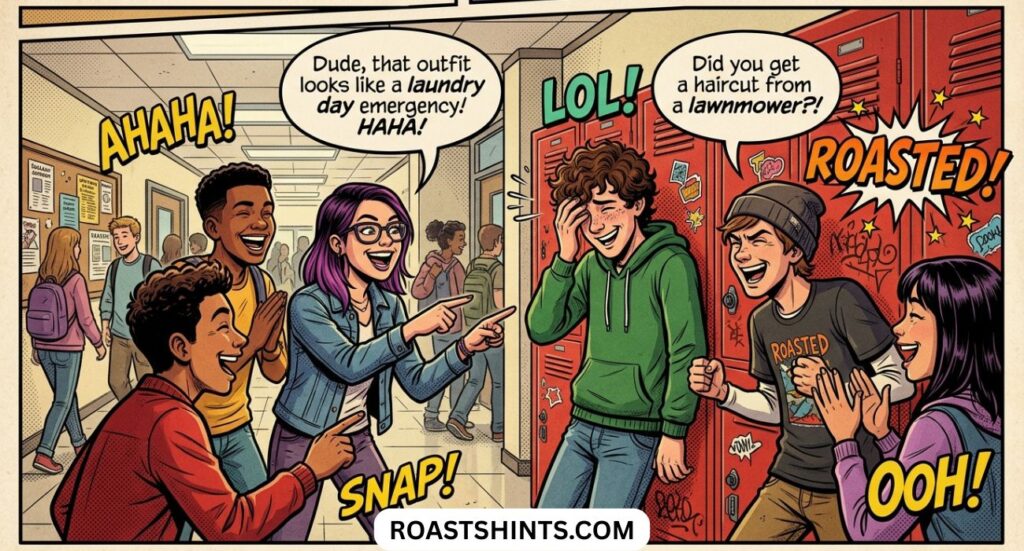
Rhyming language has a natural rhythm. When the first half of a roast creates an expectation, the final rhyming word can deliver an unexpected punchline.
That combination makes rhyming humor especially useful for jokes. A short sentence can sound more polished simply because its words fit together naturally.
Good roasting also depends on creativity. The strongest witty comebacks do not rely on ordinary insults. They use clever wordplay humor to create a surprising comparison or playful observation.
The Science Behind Rhyme Roast Lines
Rhyme can make language easier to remember because repeated sounds create a recognizable pattern. This helps explain why catchy sayings, jokes, songs, and rhyme insults can stay in someone’s memory.
A successful roast often follows the same basic pattern: setup, expectation, and punchline. The rhyme helps signal that the punchline is coming.
This is one reason roast battle lines often sound more impressive when spoken aloud. The rhythm gives the speaker a natural structure.
Rhythm, Recall, and the Punchline
Think about a simple comeback such as, “You talk a lot, but you bring no thought.” The repeated sound gives the sentence a stronger finish than a plain statement.
That effect becomes even stronger in rap battle style roasts, where rhythm, delivery, and word choice work together.
The goal is not complicated vocabulary. It is finding words that create a clean setup and satisfying ending.
Emotional Impact and Entertainment
A roast can create laughter because it combines surprise with exaggeration. However, the same words can feel unpleasant if the speaker clearly intends to embarrass someone.
Good humor leaves room for the other person to laugh. That is why rhyme-based burns work best when aimed at harmless habits, exaggerated behavior, or a playful situation.
50 Roasts That Hurt and Rhyme
Here are 50 original examples ranging from light teasing to sharper banter. Use them as inspiration and adjust the wording to fit the situation.
1. Your Content’s Thin, But Your Chin’s Not Keen
A playful line for someone who talks confidently without bringing much substance. Its short structure makes it easy to deliver.
2. You Brag Nonstop, But Your Skill’s a Flop
This works when someone keeps advertising their talents but cannot quite demonstrate them.
3. Acting All High, But You’re Just a Fly
The exaggeration creates the humor. It works best when delivered with a smile rather than genuine hostility.
4. Hot Air Flow, But Nothing to Show
This is a quick comeback for someone whose promises seem much bigger than their results.
5. You’re Bark So Loud, Yet Your Bite’s Not Proud
The familiar bark-and-bite contrast gives this roast an instantly understandable setup.
6. Your Game’s Rusty, But Your Jokes Feel Dusty
A fun option for a friend whose competitive skills and jokes both need a little updating.
7. Walking Billboard, But Your Value’s Nil
This exaggerated line pokes fun at someone who seems more interested in advertising themselves than proving their point.
8. Gives Advice Like a Sage, Yet You Live in a Cage
The contradiction is the punchline. It works particularly well during playful arguments about advice.
9. You Preach Your Plan, Yet You Don’t Stand
Use this when someone constantly explains what others should do but rarely follows their own advice.
10. Smile Like Gold, But Your Heart’s Gone Cold
This is a sharper poetic line, so save it for people who understand your sense of humor.
11. You Posture Grand, But Slip in the Sand
The visual image makes the insult funnier. It turns confidence into a cartoon-like fall.
12. Your Ideas Shout, But Quieter Thoughts Have Clout
Instead of attacking appearance, this one focuses on substance versus volume.
13. You Flex Your Wealth, Still You Can’t Buy Health
The line uses contrast to create its punch. It is better suited to social commentary than a serious personal attack.
14. Face of Steel, But No True Zeal
Short and rhythmic, this works as a playful response when someone looks confident but lacks enthusiasm.
15. Your Attitude’s Loud, Your Logic’s Bowed
This targets overconfidence rather than a personal characteristic.
16. Loud as a Drum, But Nothing’s to Come
A simple line for someone who makes big announcements without following through.
17. Your Style Is Bright, But Your Depth’s a Blight
This creates a contrast between appearance and substance.
18. Talking Like a Boss, Yet You Floss No Gloss
The intentionally exaggerated wording gives it an almost cartoonish feel.
19. All Dressed to Slay, But Your Words Don’t Pay
This works as a light fashion-and-attitude joke when the relationship allows playful teasing.
20. You Build a Façade That’s Bound to Fraud
The metaphor gives this roast a more dramatic, almost theatrical style.
21. You Bring the Heat, But Can’t Handle the Beat
A useful comeback during games, challenges, or competitive conversations.
22. You Claim You’re Wise, But We See Through the Disguise
This works when someone is pretending to know everything.
23. You Aim for Fame, But Forget the Game
A short option for someone chasing attention without putting in the work.
24. Your Talk Is Slick, But Your Logic’s Sick
This is a compact comeback for an argument where someone’s confidence exceeds their reasoning.
25. You Call It Class, But We Call It Sass
A playful response to someone acting overly superior.
26. You Want the Crown, But Keep Falling Down
This line works particularly well during friendly competitions.
27. Your Joke Had Style, But Only for a While
A gentle roast for a joke that started strongly and ended badly.
28. You Think You’re Rare, But You’re Everywhere
This is useful when someone acts unique while copying everyone else.
29. You Talk With Pride, But Logic’s Not on Your Side
A straightforward rhyme for a heated but playful disagreement.
30. Your Comeback’s Late, Just Like Your Update
A modern option for group chats and online conversations.
31. You Bring the Noise, But Not the Poise
Short, clean, and easy to remember.
32. Your Confidence Is Tall, But Your Results Are Small
This contrast creates a classic roast structure without relying on crude language.
33. You Want to Lead, But Never Do the Deed
A playful response for someone who loves giving orders.
34. You Call Yourself Bold, But Your Stories Get Old
Perfect for someone who repeats the same exaggerated stories.
35. Your Speech Is Long, But Your Point Is Wrong
One of the simplest funny rhyme insults for an unnecessarily long argument.
36. You Bring the Shade, But Your Point Will Fade
This can work as a light response to someone attempting a dramatic insult.
37. You Seek Applause, But Forget the Cause
A good choice for teasing someone who wants attention more than achievement.
38. You Think You’re Slick, But Your Tricks Are Quick
The rhyme gives this line a playful, almost comic-book feel.
39. You Throw a Jab, But Miss the Tab
A silly option for a failed comeback or missed opportunity.
40. Your Ego’s Wide, But Sense Can’t Hide
This line works when someone is being unnecessarily confident.
41. You Came to Roast, But Became the Toast
A classic reversal: the person attempting the roast becomes the subject of the joke.
42. You Wanted a Fight, But Lost the Mic
This has a competitive feel and fits a playful roast battle.
43. Your Words Are Fast, But Your Best Days Passed
A sharper line that should be reserved for friendly contexts where exaggeration is clearly understood.
44. You Bring the Flame, But Forget Your Aim
Useful for someone who starts an argument without knowing where it is going.
45. You Call That a Burn? Let’s Wait for Your Turn
A playful comeback when someone delivers a weak insult.
46. You Want the Stage, But Can’t Manage the Page
This one works especially well for writers, performers, or people making big creative claims.
47. Your Punchline’s Small, But Your Ego’s Tall
A simple contrast that works in almost any playful roasting session.
48. You Tried to Impress, But Created a Mess
This is a clean option for a harmless mistake.
49. You Entered With Pride, Then Rhymes Took Your Side
A playful line for a competitive wordplay session.
50. You Came With a Roast, But I Served You the Most
A strong closing line for a friendly exchange because it turns the roast back on the other person.
Funny Roasts That Rhyme Without Going Too Far
Not every roast needs to be brutal. In fact, funny roasts often work better when everyone can laugh at the situation.
A clean joke about someone’s late reply, failed prediction, or terrible choice of words can be more entertaining than a deeply personal insult.
The best savage roasts are also not necessarily the cruelest ones. A clever observation delivered at the perfect moment can create a bigger laugh than an aggressive attack.
Poetic Roasts and Savage Rhymes
There is a creative side to roasting. Poetic roasts use imagery, rhythm, exaggeration, and unexpected comparisons to make a comeback sound almost like a tiny poem.
Strong savage rhymes often use contrast. The first line builds confidence, while the second line flips the meaning.
That reversal is one of the easiest ways to make a roast feel sharper without making it genuinely nasty.
Rhyme Insults vs. Ordinary Rhyming Insults
Ordinary insults usually state the criticism directly. A rhyming version adds a pattern that makes the message sound more deliberate.
For example, instead of saying, “You talk too much,” a playful roast might become, “You talk all day, but say nothing worth the stay.”
The second version has more rhythm and feels more like a performance.
Roast Jokes, Funny Comebacks, and Clever Replies
A strong comeback does not always have to be a prepared insult. Sometimes the best line responds directly to what someone just said.
That is where funny comebacks and savage comebacks differ. A funny comeback can keep everyone laughing, while a savage comeback usually carries more bite.
Similarly, clever comebacks rely on observation and timing rather than simply using harsh words.
How to Create Your Own Short Roasts That Rhyme
Creating original rhymes becomes easier when you start with an idea instead of searching for an insult.
First, identify a harmless behavior. Maybe someone always arrives late, talks too confidently, or makes promises they never keep.
Next, choose a simple word connected to that behavior. Then search mentally for another word with a similar ending.
Finally, build a short setup and place the strongest word at the end. This creates a natural punchline.
Use Simple Rhyme Pairs
Words such as “late” and “great,” “show” and “know,” or “game” and “name” are easy to work with.
Simple words often create better jokes because the audience understands them immediately.
Add an Unexpected Turn
The first part should make the listener expect one idea. The second part should change that expectation.
That surprise is what turns a basic statement into a memorable roast.
Keep the Line Short
Long explanations weaken a punchline. If the audience needs several seconds to understand the joke, the moment may disappear.
Short lines are particularly useful for clean funny roasts, captions, and casual conversations.
Clever Insults vs. Playful Insults
There is an important difference between being clever and being cruel.
Clever insults usually focus on a person’s behavior, argument, or funny situation. Playful insults create a shared joke where both people understand that the exchange is not meant as serious hostility.
If someone looks uncomfortable, stop. A good roast should never depend on humiliating someone who has not agreed to the joke.
Verbal Sparring and Witty Banter
Verbal sparring is built around quick reactions. One person makes a joke, another responds, and the exchange continues.
Good witty banter depends on listening. If you are only waiting for your turn to speak, you may miss the perfect opening for a comeback.
The strongest performers respond to what was actually said rather than reciting unrelated prepared lines.
Funny Verse for Friends
Friends often have the freedom to joke about harmless habits because they already understand each other’s boundaries.
A short funny verse for friends might tease someone about always being late, losing games, forgetting plans, or sending dramatic messages.
The safest approach is to roast something temporary or silly rather than something deeply personal.
Read also: Polite Responses to “Have A Good Day”
Rhyme-Based Roasts for Social Media
Short-form platforms favor concise language. A memorable rhyme can work particularly well as a caption, comment, or response.
Still, online audiences lack the facial expressions and tone that make jokes easier to understand in person. A line intended as playful can therefore sound harsher on screen.
For social media roasts, keep the context obvious and avoid targeting someone who clearly does not want to participate.
Instagram Captions and Short Comebacks
A clever two-line rhyme can work as an Instagram caption when the joke is clearly playful.
The same approach can work in TikTok duets, comment sections, and short-form comedy content where rhythm is already part of the format.
Online Roast Circles
In online roast circles, participants often expect quick responses and exaggerated humor. Even there, boundaries still matter.
Avoid turning a joke into targeted harassment. Creative language is fun because it challenges your imagination, not because it causes real distress.
Creative Wordplay and Witty One-Liners
Creative wordplay gives a roast its personality. Instead of choosing the first insult that comes to mind, look for a pun, contrast, double meaning, or unexpected comparison.
The result can become a witty one-liner that sounds original rather than copied.
This is also why rhyming jokes remain useful for writers and comedians. Sound becomes part of the joke itself.
Poetic Roast and Poetic Diss Examples
A poetic roast can use metaphor instead of direct insults. For example, someone who talks endlessly might be compared to a radio that forgot how to switch off.
That approach makes poetic diss examples feel more creative. The humor comes from the image rather than simply calling someone a name.
This style also works well for playful insult poetry, where the goal is entertainment and verbal creativity.
Funny Insults That Rhyme
The best funny insults that rhyme usually have three qualities: they are easy to understand, they contain a surprise, and they finish strongly.
For example:
“You wanted the crown, but keep falling down.”
The rhyme is simple, but the reversal gives it energy.
Lyrical Diss and Savage One-Liners in Rhyme
A lyrical diss borrows some techniques from songwriting and battle rap. Rhythm becomes as important as the actual wording.
Savage one-liners in rhyme can be especially effective when the speaker pauses before the final rhyming word.
However, delivery should remain playful when the setting is casual. A clever line does not need genuine hostility to work.
Friendly Insults and Humor in Verse
Friendly insults are a form of social humor. They can strengthen a friendship when both people enjoy the exchange.
Humor in verse adds another creative layer because the speaker has to think about both meaning and sound.
That challenge makes rhyme roasting closer to a small writing exercise than a simple insult.
Roast Battle Style and Rap Battle Style
A roast battle style exchange usually involves quick setups and responses. Each person tries to outdo the previous line.
Rap battle style humor takes that idea further by adding rhythm, internal rhyme, wordplay, and performance.
You do not need to be a rapper to borrow these techniques. Even a two-line comeback can benefit from a strong beat and clear ending.
Punchline Timing Matters
Punchline timing can determine whether a roast gets laughter or silence.
Deliver the setup naturally, pause briefly, and let the final word land. Avoid immediately explaining why the line is funny.
This principle applies to comedy roast performances, friendly conversations, and casual banter.
Savage Poetry and Poetic Comebacks
Savage poetry does not need complicated vocabulary. Strong imagery and a sharp contrast can create more impact than elaborate language.
Likewise, poetic comebacks often work because they sound unexpected in an ordinary conversation.
Try combining an everyday observation with a dramatic metaphor. The contrast can make the line memorable.
How Rhyme Prediction Helps a Roast Land
When people hear the beginning of a rhyming sentence, they may subconsciously anticipate how it will end.
That process, sometimes described as rhyme prediction, creates an opportunity for surprise. The listener expects one word, but the speaker delivers another that changes the meaning.
This relationship between expectation and surprise is a major part of comedy.
Rhyme Recall and Memory
Sound patterns can make language easier to remember. That is one reason slogans, lyrics, nursery rhymes, and jokes often use repetition.
The same principle supports rhyme recall in short roast lines. A memorable comeback is easier to repeat because its sound structure helps preserve the wording.
Emotional Impact of Humor
The emotional impact of a joke depends on more than its words. Relationship, setting, tone, and audience all matter.
A line that makes a close friend laugh might upset a stranger. Therefore, successful roasting requires social awareness.
Entertainment Value in a Good Roast
The real purpose of a playful roast is entertainment value. The audience should enjoy the creativity, timing, and surprise.
That is why the strongest roast writers focus on originality rather than simply making their insults harsher.
Psychology of Humor and Rhyme
The psychology of humor involves several factors, including surprise, incongruity, social connection, and expectation.
Rhyme adds another layer because it gives the listener a pattern to follow. When the ending creates an unexpected but logical connection, the result can feel satisfying.
Timing in Comedy and Audience Reaction
Timing in comedy is closely connected to audience reaction. A great line needs the right moment.
If the conversation is already playful, a quick rhyme can add energy. If everyone is serious or uncomfortable, the same line may fall flat.
The best comedians learn to recognize that difference.
Rhyme Roast Types at a Glance
| Roast type | Style | Best use |
| Funny rhymes | Light and playful | Friends |
| Savage rhymes | Sharper | Friendly roast battles |
| Poetic roasts | Creative and descriptive | Writing and performances |
| Short rhyming comebacks | Quick | Conversations |
| Clean roasts | PG-friendly | General audiences |
| Rap battle roasts | Rhythmic | Competitions |
| Social media roasts | Short and catchy | Captions and comments |
| Friendly roasts | Gentle teasing | Close relationships |
How to Deliver a Rhyme Roast Without Sounding Forced
Words matter, but delivery matters too.
Say the setup naturally rather than announcing that you have a roast prepared. Then give the final rhyming word enough emphasis to make the punchline clear.
Confidence helps, but overacting can weaken the joke. A calm delivery often makes a clever line feel more spontaneous.
Common Mistakes When Using Rhyming Roasts
One common mistake is forcing a rhyme even when the sentence no longer makes sense.
Another is making every roast excessively harsh. If every line sounds angry, the humor can disappear.
Avoid repeating the same rhyme pattern too many times. Variety keeps a roast performance interesting.
Finally, do not confuse a joke with permission to cross someone’s boundaries. If the other person is not enjoying the exchange, move on.
How to Make Your Roasts More Memorable
Start with a specific observation. Generic insults are easy to forget, while a clever reference to something happening in the moment feels original.
Use short sentences and strong endings. Avoid unnecessary words between the setup and punchline.
Most importantly, listen. The best memorable comebacks often come from responding to something unexpected rather than repeating a prepared list.
Why Creative Roast Ideas Beat Generic Insults
Generic insults can be copied by anyone. A creative roast reflects the situation, which makes it feel more personal without becoming genuinely hurtful.
That is where creative roast ideas have an advantage. They encourage you to build humor around context, timing, and word choice.
A good roast should make people think, “That was clever,” rather than, “That was unnecessarily mean.”
Roasting Friends Without Crossing the Line
Roasting friends can be a fun part of friendship when everyone understands the rules.
Keep jokes focused on harmless habits and funny situations. Avoid sensitive subjects, private information, serious insecurities, or characteristics someone cannot reasonably change.
When in doubt, choose a lighter line. You can always make a joke sharper later, but you cannot always take back a hurtful comment.
The Art of Funny Verse and Witty Poetry
Funny verse combines the structure of poetry with the freedom of comedy. It can be as short as two lines or expanded into a longer playful poem.
Witty poetry works particularly well when every line contributes something new. Do not rhyme simply for the sake of rhyming.
A good rhyme should support the joke, not distract from it.
Roast Performance Tips for Real Conversations
A successful roast performance does not require a stage. It can happen around a dinner table, during a game night, or in a group chat.
Listen for opportunities. Keep your voice relaxed. Give the punchline space.
If everyone laughs, let the moment breathe. There is no need to immediately add another insult.
Where Rhyme-Based Humor Fits Best
Rhyming roast humor appears in many forms of entertainment. You may encounter it in comedy clubs, online jokes, rap battles, open-mic performances, social media, and informal roast circles.
Each environment has different expectations.
A comedy club audience expects performance. Friends expect shared context. Social media audiences may have no context at all.
Understanding that difference helps you choose the right level of humor.
How to Create Your Own Roasts That Hurt and Rhyme
Creating roasts that hurt and rhyme is easier when you focus on rhythm, timing, and a clever idea. Start with a harmless habit, choose two words that rhyme, and build a short punchline around them. Creative wordplay, funny comparisons, and unexpected endings can turn ordinary teasing into memorable comebacks that sound natural and entertaining during playful conversations.
The best rhyme roast lines do not need complicated vocabulary. Keep each line short, clear, and easy to say aloud. Try mixing witty comebacks, funny insults that rhyme, and playful observations about everyday situations. A strong setup followed by a surprising rhyme creates rhythm, improves recall, and gives your roast a satisfying finish without making it unnecessarily cruel.
See also: Happy New Month Messages for Friends
When to Use Roasts That Hurt and Rhyme
Knowing when to use roasts that hurt and rhyme matters as much as creating them. These playful lines work best among friends, during friendly banter, or in situations where everyone understands the joke. Consider the mood before speaking, because even clever rhyming insults can sound harsh when the audience does not expect teasing or competitive humor.
For social media, group chats, and roast battles, choose lines that are witty rather than genuinely offensive. Good rhyme-based burns should entertain everyone involved and leave room for laughter. Pay attention to reactions, respect personal boundaries, and stop when someone becomes uncomfortable. The best roast combines cleverness, timing, and humor while keeping the overall exchange friendly.
FAQ’s
What Are Some Roasts to Say?
Try: “You talk a big game, but you’re missing the fame.”
Or: “Your jokes are old, and your stories have been told.”
What Is the Most Popular Roast?
A classic is: “You’re not stupid; you just have bad luck thinking.”
It works because it is short, clever, and easy to remember.
What Is the Best Rap Roast?
Try: “You came with a verse, but I made it worse; your bars lack heat, now take your seat.”
It uses rhythm and rhyme to create a playful rap-battle comeback.
How to Roast Someone Slang?
Use casual phrases like “Bro, that comeback was weak—your Wi-Fi has more connection than your brain.”
Keep slang playful and avoid personal or sensitive topics for a fun roast.
Final Thoughts
Roasts that hurt and rhyme can make friendly jokes more fun and memorable. Simple words, clear rhymes, and good timing can create a strong comeback. A good roast should focus on humor, not real pain. Keep your lines short and easy to understand. Friendly jokes work best when everyone enjoys the moment and respects each other.
Practice helps you create better rhymes and clever comebacks. Use funny ideas, simple words, and playful lines when you roast friends. Avoid cruel jokes or sensitive topics. The best roasts that hurt and rhyme show creativity and humor. Good timing also makes each line sound smoother, sharper, and more entertaining during friendly conversations.