Yellow Heart Emoji Meaning and How to Respond to It 💛
Yellow Heart Emoji Meaning shows friendship, kindness, and happy feelings. People use the 💛 emoji to show care and support. It often feels warm, friendly, and positive in text messages.
A small yellow heart can say many things in one second. It can make a message feel sweet and kind. Knowing its meaning helps you understand people better.
The Yellow Heart Emoji Meaning can change with the situation. Friends, family, coworkers, and crushes may use it differently. Learning its meaning helps make texting simple and clear.
Rad more: What Is the Current Phase of the Moon as an Emoji?
The Symbolism of the Yellow Heart Emoji

The yellow heart symbolism is strongly connected to happiness, friendship, optimism, emotional warmth, and trust. In color psychology, yellow often represents sunshine, hope, energy, and positivity. Because of this emotional connection, the yellow heart has become one of the most comforting emojis used in texting. While some heart emojis feel intense or romantic, the yellow heart feels emotionally safe and welcoming. It often creates feelings of warmth without emotional pressure, which is why many people consider it a safe-to-use heart emoji in everyday conversations.
The biggest reason people use the yellow heart is because it feels kind and easygoing. Unlike the red heart, which may suggest romance or passion, the yellow heart sends a softer message. The heart emojis meaning can change depending on color, and yellow usually signals joy and emotional support. For example, a red heart may say “I love you,” while a yellow heart may simply say “I care about you” or “I’m happy for you.” This difference makes the emoji perfect for friendships, casual texting, and emotionally positive moments.
The table below shows how different heart emojis are often understood in texting culture:
| Heart Emoji | Common Meaning | Emotional Tone |
| ❤️ Red Heart | Love, romance, deep affection | Strong and romantic |
| 💛 Yellow Heart | Friendship, positivity, care | Warm and friendly |
| 💙 Blue Heart | Trust, loyalty, calm feelings | Stable and supportive |
| 🖤 Black Heart | Dark humor, sadness, sarcasm | Intense or edgy |
| 💚 Green Heart | Growth, wellness, jealousy | Mixed meaning |
This table helps explain why the yellow heart stands out among heart emoji colors. It feels emotionally warm without becoming overly romantic. This unique role has made it popular for friendly emoji responses, emotional support, and everyday digital conversations.
Friendship and Positivity
The strongest meaning connected to the yellow heart is friendship. Many people see it as the perfect symbol of trust, kindness, emotional closeness, and support. Because of this, the yellow heart is often called a yellow heart friendship symbol that celebrates healthy and caring relationships. If someone sends you a yellow heart after helping them, supporting them, or sharing a fun moment together, it usually means they appreciate your presence in their life.
The emoji also represents emotional positivity. In fact, many communication experts describe it as one of the best cheerful emoji symbols because it instantly creates warm feelings. In the United States, friends commonly use yellow hearts in text messages, Instagram comments, Snapchat conversations, and birthday wishes. Someone may send a yellow heart after hearing good news or simply to make another person smile. In this way, it becomes a small but powerful warm message emoji that spreads encouragement.
For example, imagine your best friend texts, “You did amazing today 💛.” The emoji here acts as a form of emotional support. It makes the message feel softer, kinder, and more personal. This is why many people view it as a positive emoji meaning connected with emotional comfort and trust. Even in online communities, yellow hearts are often used to show support without sounding too serious or dramatic.
In short, if you see a yellow heart in your messages, there is a strong chance the sender wants to create a positive, caring, and emotionally safe feeling. While meanings can change based on context, friendship and positivity remain at the center of the yellow heart in texting.
A Symbol of Pure Intent
One of the biggest reasons people love the yellow heart emoji is because it often feels honest and emotionally safe. In a world where texts can easily be misunderstood, the yellow heart emoji meaning often stands for kindness without pressure and care without confusion. Many people see it as a symbol of good intentions because it usually sends a message of support, appreciation, and emotional warmth without automatically sounding romantic. This is why many texting experts describe the yellow heart as a safe-to-use heart emoji for everyday conversations.
When someone sends a yellow heart, they are often trying to show emotional closeness while still keeping things comfortable. Unlike romantic emojis that may feel intense, the yellow heart usually carries softer emotional energy. The 💛 emoji meaning often says, “I appreciate you,” “You matter to me,” or “I hope you are doing well.” Because of this, many people feel more relaxed using it in casual conversations with friends, classmates, coworkers, or even family members.
To better understand this idea, look at how different heart emojis can affect emotional tone in texting:
| Emoji | Hidden Emotional Message | Typical Feeling |
| ❤️ | Deep affection or romance | Passionate |
| 💛 | Warmth, friendship, appreciation | Comfortable |
| 💖 | Excitement and emotional closeness | Sweet |
| 💙 | Loyalty and emotional trust | Calm |
| 💜 | Caring or admiration | Gentle |
This comparison shows why many people choose the yellow heart when they want emotional warmth without confusion. Since emoji interpretation depends on emotional context, many texters prefer the yellow heart because it reduces misunderstandings. Instead of sounding overly serious or romantic, it creates a softer emotional tone.
Cultural Perceptions
Even though the yellow heart is widely used, its meaning can sometimes change depending on culture, age group, and communication style. In the United States, the yellow heart emoji meaning is mostly connected to friendship, happiness, and emotional support. Most Americans see it as a friendly and caring symbol rather than a romantic one. However, like many parts of digital communication, emoji meanings are not always exactly the same for everyone.
For younger generations, especially Gen Z and Millennials, the yellow heart often plays an important role in everyday messaging. Teenagers and young adults commonly use it in Snapchat streaks, Instagram comments, and text messages to show emotional closeness. In these cases, the emoji usually acts as a friendship emoji rather than something romantic. Many people use it to support friends, celebrate achievements, or simply brighten someone’s day..
The table below explains how the yellow heart is often understood in different situations across the USA:
| Situation | Common Meaning in the USA |
| Texting a Best Friend | Friendship and support |
| Workplace Chat | Polite appreciation |
| Family Group Chat | Love and encouragement |
| Social Media Comments | Positivity and kindness |
| Someone You Like | Friendly interest or subtle affection |
This table highlights how emoji meanings in relationships depend heavily on context. The same emoji can feel different depending on who sends it and why. A yellow heart from your mom may feel comforting, while a yellow heart from someone you are dating may leave you wondering about hidden feelings.
Another important factor is emotional intention. Communication experts explain that emojis act as part of emotional expression in texting. Since texting removes voice and facial expressions, emojis help replace emotional signals. This is why understanding emoji communication cues matters so much in modern relationships. Without those emotional hints, short text messages can sometimes feel cold or confusing.
Real-World Examples: How People Use the Yellow Heart
Understanding the yellow heart emoji meaning becomes much easier when you look at how people actually use it in everyday life. While definitions help explain emotions, real conversations show how the emoji truly works. In American texting culture, the yellow heart is often used to create warmth, support, encouragement, and emotional comfort. Since texting lacks facial expressions and tone of voice, emojis become powerful emotional helpers. This is why many experts consider emojis important digital communication signs in modern conversations.
The yellow heart often appears in friendships because it feels emotionally warm without becoming too serious. Imagine your best friend texts you after a difficult day saying, “You’ve got this 💛.” The message instantly feels supportive and caring. Here, the emoji acts like emotional reassurance. This is one reason the yellow heart from a friend usually feels safe, comforting, and genuine. In many friendships, people use yellow hearts to celebrate wins, encourage one another, or simply stay emotionally connected.
Workplace conversations have also changed because emojis are now part of professional communication. While workplaces once avoided emojis, many American offices now use them casually in Slack, Microsoft Teams, and workplace chats. The yellow heart from coworkers often signals appreciation while staying professional. For example, a manager might message, “Great work on the project 💛.” The yellow heart here softens the message and makes appreciation feel more personal without sounding unprofessional.
The table below shows common real-life situations and what the yellow heart usually means:
| Situation | Meaning of the Yellow Heart |
| Best friend sends 💛 | Appreciation and friendship |
| Coworker uses 💛 | Warm professionalism |
| Family member sends 💛 | Love and support |
| Social media comment 💛 | Encouragement and kindness |
| Someone you like sends 💛 | Friendly interest or subtle feelings |
How to Respond to a Yellow Heart Emoji
Once people understand the yellow heart emoji meaning, the next question becomes simple: how should you respond? The truth is that there is no single perfect answer. The best response depends on who sent the emoji, the situation, and the emotional tone of the conversation. In most cases, replying naturally works best because the yellow heart usually creates a relaxed and positive mood.
One of the smartest rules in texting is to match emotional energy. If someone sends a warm message with a yellow heart, sending kindness back usually feels natural. This does not mean you always have to use another yellow heart, but matching tone often creates smoother conversations. Communication experts often describe this as reading emoji communication cues, which means understanding emotional signals hidden inside text messages.
Another important thing to remember is that not every emoji carries hidden emotional meaning. Many people overthink texting and search endlessly for clues. Experts in emoji psychology often remind people that emojis are usually meant to make communication softer, not more stressful. In many situations, the sender may simply be trying to sound kind and positive.
Below is a quick guide to understanding how responses can change based on the relationship:
| Sender | Best Response Style |
| Friend | Friendly and warm |
| Coworker | Professional but kind |
| Family Member | Caring and appreciative |
| Romantic Interest | Slightly warm or playful |
| Someone You Like | Match their energy carefully |
This approach helps avoid awkwardness while still showing emotional awareness. Since emojis are part of modern texting language, learning how to respond naturally makes conversations feel easier and more comfortable.
A good rule to remember is simple: mirror the emotional energy you receive. If someone sends warmth, return warmth. If someone keeps things casual, stay relaxed. This helps create healthy texting communication tips that feel natural rather than forced.
See more: Roasts That Hurt and Rhyme
1. If It’s From a Friend
When the yellow heart comes from a friend, things are usually easy to understand. Most of the time, the yellow heart from a friend simply means support, care, trust, or appreciation. Friends often use the emoji after funny conversations, emotional talks, or moments where they want to show kindness. Since the yellow heart is strongly linked to friendship, there is usually no reason to overthink it.
In American friendships, people commonly use yellow hearts to celebrate achievements or encourage one another. A friend may text, “Proud of you 💛” after good news or “Hope you feel better soon 💛” during a hard week. In these situations, the emoji acts as a gentle emotional hug. It creates emotional closeness without becoming dramatic or overly emotional.
If your friend regularly uses yellow hearts, there is usually no hidden message. It often reflects their personality and texting style. Many people naturally use emojis to sound warm and positive. Understanding these emotional texting cues helps avoid unnecessary confusion.
At the end of the day, responding to a friend’s yellow heart should feel easy. Friendship is about comfort, trust, and emotional honesty. Since the yellow heart already carries those feelings, simple and warm responses usually work best.
If It’s From a Romantic Interest
Things can feel a little more confusing when the yellow heart comes from someone you may have romantic feelings for. Suddenly, a simple emoji can start to feel like a mystery. You may wonder if they are trying to flirt, if they only see you as a friend, or if they are simply being kind. This is why many people search online for answers about the yellow heart flirting meaning or ask questions like, “Is the yellow heart romantic?” The truth is that context matters much more than the emoji itself.
When it comes to a yellow heart from a crush, the message can sometimes mean emotional closeness without serious romantic pressure. Many people use the yellow heart when they feel comfortable with someone but are not ready to send stronger romantic signals. In some cases, it can even be a soft way of testing emotional interest while keeping things emotionally safe. Since the yellow heart feels warm and positive, it may signal emotional care without moving too fast.
The table below can help explain possible meanings:
| Situation | Possible Meaning |
| Sends 💛 after emotional talks | Emotional closeness |
| Sends 💛 regularly | Comfortable connection |
| Combines 💛 with compliments | Possible romantic interest |
| Uses 💛 with everyone | Friendly personality |
| Sends only once | Casual positivity |
This table shows why emoji meanings in relationships should never be judged too quickly. One emoji rarely tells the full story. Emotional tone, message content, and texting habits matter far more.
If you want to respond naturally, the safest choice is usually to match their energy. If they send a yellow heart, sending one back often feels comfortable and balanced. You can also add warmth without becoming too serious. For example, saying “That’s really sweet 💛” or “You always know how to make me smile 😊” keeps the conversation positive.
If It’s From Family or Colleagues
A yellow heart from family members or coworkers usually feels easier to understand because the emotional meaning tends to be simpler and more direct. In these situations, the yellow heart emoji meaning usually represents appreciation, support, kindness, or emotional closeness without romantic confusion. Since family and work relationships often rely on warmth and trust, the yellow heart becomes a comfortable emotional symbol.
Workplace situations are a little different because professionalism matters. The yellow heart from coworkers usually carries a polite and supportive meaning. In many modern American workplaces, emojis are becoming more common in workplace messaging apps like Slack, Microsoft Teams, and email chats. A coworker might send, “Thanks for helping with the project 💛” to show appreciation while keeping things warm and professional.
This growing professional use of emojis has changed how people communicate at work. In the past, work messages often sounded formal and cold. Today, small emojis can help soften communication and improve teamwork. However, balance is important. Most professionals recommend avoiding overly romantic emojis in workplace settings. This is why the yellow heart works so well. It feels emotionally warm but still respectful.
The table below explains how yellow hearts are commonly understood in work and family settings:
| Sender | Common Meaning |
| Parent | Care and protection |
| Sibling | Support and closeness |
| Relative | Warm affection |
| Coworker | Appreciation and teamwork |
| Manager | Positive encouragement |
Understanding coworker texting etiquette also matters when responding. A warm but professional response is usually best. Saying “Thanks so much 💛” or “Really appreciate it!” keeps the tone positive without becoming overly personal.
In both family and workplace settings, the yellow heart usually creates emotional comfort rather than emotional confusion. Since it works as a positive emoji meaning, most people interpret it as kindness, support, and appreciation.
If It’s From Someone You Like

Receiving a yellow heart from someone you secretly like can feel exciting and confusing at the same time. Suddenly, a tiny emoji feels much more important than it probably should. You may find yourself rereading the message, wondering what hidden emotions might exist behind the symbol. Questions like “Do they like me?” or “Was that flirting?” are completely normal when emotions are involved.
If you want to reply without making things awkward, matching their tone usually works best. You can send another yellow heart back or add gentle warmth to your response. Saying something like “That made my day 💛” or “You’re pretty awesome 😊” keeps the mood positive while leaving room for emotional connection.
At the same time, avoid reading too deeply into every message. Healthy attraction grows through trust, honesty, and shared experiences—not only emojis. While understanding emoji tone meaning can help, the strongest relationships always grow from real communication and emotional consistency.
If You Want to Keep the Vibe Friendly
Sometimes, receiving a yellow heart can make a situation feel a little unclear, especially if you want to make sure things stay friendly. Maybe someone you know sends you a yellow heart often, but you are not interested in taking the relationship in a romantic direction. The good news is that the yellow heart emoji meaning already leans toward friendship and positivity, which makes it much easier to keep conversations comfortable and respectful.
Many communication experts suggest consistency when trying to avoid misunderstandings. If your texts always include friendly language, supportive emojis, and a relaxed tone, people are more likely to understand your intentions. This is especially important in avoiding emoji misunderstandings, which happen when someone reads deeper emotional meaning into casual messages.
The table below shows how responses can shape emotional tone:
| Response Style | Emotional Message |
| “Thanks 💛” | Friendly warmth |
| “Glad we’re buddies 😊” | Clear friendship |
| “Appreciate you 💛” | Supportive and kind |
| “You’re sweet ❤️” | More romantic feeling |
| “Miss you ❤️” | Strong emotional closeness |
This comparison helps explain why understanding romantic vs friendly emojis matters in texting. Small emoji choices can completely change how a message feels. The yellow heart usually stays emotionally safe because it creates kindness without emotional pressure.
Another smart tip is paying attention to overall communication patterns. If someone seems emotionally invested while you want to stay friends, gentle consistency matters more than direct rejection. Healthy communication often works best when kindness stays at the center. The yellow heart naturally supports this approach because it encourages positive texting habits and emotional respect.
In the end, keeping things friendly does not mean being cold or distant. You can still be warm, supportive, and caring while maintaining healthy emotional boundaries. The yellow heart simply makes that process easier.
Psychology Behind Emoji Interpretation
To fully understand the yellow heart emoji meaning, it helps to understand how the human brain reacts to emojis. Even though emojis are tiny pictures on a screen, they can strongly affect emotions. Researchers studying emoji psychology have found that people process emojis almost like facial expressions. This means our brains often react emotionally to emojis without us even noticing it.
Think about the difference between these two messages:
“Hope you feel better.”
“Hope you feel better 💛”
The second message feels warmer, softer, and more caring. This happens because emojis work like emotional signals. They add tone to text messages, helping people understand emotional meaning more clearly. Since texting removes body language and voice tone, emojis become part of our digital body language.
Communication experts explain that emojis now function as emotional shortcuts. Instead of writing long emotional explanations, people use symbols to show kindness, humor, sadness, excitement, or support. The yellow heart works especially well because yellow is naturally connected to happiness, sunshine, comfort, and optimism. This emotional connection strengthens the yellow heart symbolism people already associate with friendship and positivity.
Color psychology also plays a big role. Yellow is often connected to warmth and emotional safety. In American culture, yellow usually represents happiness, hope, and positivity. Because of this emotional association, people often view the yellow heart as emotionally comforting instead of emotionally intense.
The table below explains common emotional effects linked to heart colors:
| Heart Color | Emotional Feeling |
| ❤️ Red | Romance and passion |
| 💛 Yellow | Warmth and positivity |
| 💙 Blue | Trust and calmness |
| 💚 Green | Balance and growth |
| 🖤 Black | Mystery or dark humor |
This emotional reaction is one reason emojis have become such an important part of modern texting language. Without emotional clues, messages can sometimes feel cold or confusing. Emojis help solve this problem by acting as emotional helpers.
SEO Insights: Why People Search for Emoji Meanings
Have you ever noticed how often people search online for emoji meanings? Millions of Americans search questions like “what does yellow heart mean,” “Is a yellow heart romantic?” or “Why did my crush send me 💛?” every year. This growing curiosity shows how important emojis have become in everyday communication.
The reason is simple: texting removes emotional clues. In face-to-face conversations, people can hear voice tone, see body language, and notice facial expressions. Text messages remove those signals, making communication feel less clear. This is why people often turn to search engines for help understanding emoji meanings and emotional intent.
Another reason people search is because relationships today rely heavily on digital communication. Many friendships, romantic relationships, and workplace conversations happen through phones. Since emojis now shape emotional meaning, understanding emoji meanings in relationships feels more important than ever.
Search behavior also shows that people often feel emotional uncertainty. Someone receives a yellow heart from a crush, and suddenly they begin wondering about hidden meaning. Questions around yellow heart from a crush, yellow heart flirting meaning, and emotional intention have become common search trends because people naturally want reassurance.
The table below highlights common search questions Americans ask:
| Search Question | Why People Search It |
| What does 💛 mean? | Understanding emotional tone |
| Is yellow heart romantic? | Dating uncertainty |
| Why did my crush send 💛? | Emotional confusion |
| What does yellow heart mean in texting? | Better communication |
| Should I reply with 💛? | Response guidance |
Evergreen Tips for Responding
Responding to a yellow heart does not need to feel stressful or confusing. In most situations, the best reply is often the simplest one. Since the yellow heart emoji meaning usually leans toward warmth, kindness, and emotional support, responding with the same positive energy often works best. People sometimes overthink emojis and try to find hidden meanings in every message, but healthy communication usually feels natural and comfortable.
One of the smartest rules for texting is to match emotional tone. If someone sends a thoughtful message with a yellow heart, responding with warmth helps maintain emotional balance. For example, if someone texts, “Hope everything goes well today 💛,” replying with something like “Thank you so much 💛” feels kind and genuine. This approach creates smoother conversations and helps avoid emotional confusion. Many experts describe this as understanding emoji communication cues, where you mirror the emotional energy of the conversation.
Another important tip is to consider the relationship itself. A yellow heart from your mom likely means emotional support, while a yellow heart from a coworker may simply mean appreciation. A yellow heart from coworkers often reflects teamwork and positivity, while a yellow heart from a friend usually signals emotional closeness and support. Looking at the relationship first makes understanding emotional intent much easier.
The table below gives easy response ideas for common situations:
| Situation | Example Friendly Response |
| Friend sends 💛 | “You’re awesome 💛” |
| Family member sends 💛 | “Love you too 💛” |
| Coworker sends 💛 | “Really appreciate it!” |
| Crush sends 💛 | “That made me smile 😊” |
| Someone you like sends 💛 | “You’re sweet 💛” |
These examples work because they follow emotional tone naturally. They create comfort instead of confusion. This is one reason why many communication experts recommend friendly emoji responses that feel honest and easygoing.
It is also helpful to remember that emojis are only one part of communication. While emoji interpretation can reveal emotional tone, strong communication still depends on honesty, trust, and clear words. Sometimes, people spend too much time decoding emojis instead of simply asking questions or enjoying the conversation.
Another useful rule is to keep positivity at the center. Since the yellow heart carries a positive emoji meaning, warm and kind replies usually feel appropriate. Even if you are unsure about hidden meaning, kindness almost always works. This helps build stronger relationships while reducing unnecessary misunderstandings.
As communication continues to evolve, emojis will likely remain an important part of emotional expression in texting. Learning how to respond confidently makes online conversations feel smoother, healthier, and more enjoyable.
What Does the Yellow Heart Emoji Mean in Texting?
The yellow heart emoji meaning in texting is usually connected to friendship, happiness, and emotional warmth. Unlike romantic heart emojis, the yellow heart often feels more relaxed and emotionally safe. Many people use it to show support, appreciation, or kindness without creating romantic pressure or confusion in conversations.
The yellow heart in texting also acts as an emotional signal that softens messages. Since texts lack voice tone and facial expressions, emojis help explain feelings better. A yellow heart can make a short message feel warmer, friendlier, and more personal while keeping communication positive and comfortable.
Why Is the Yellow Heart Emoji So Popular?
The yellow heart emoji has become popular because it feels positive, warm, and easy to use in many situations. People often choose it when they want to express care without sounding too romantic. This makes it useful in friendships, workplaces, family chats, and even social media conversations.
Another reason for its popularity is the growing role of emoji meanings in online communication. Since texting has become part of daily life in the USA, people want simple ways to show emotion. The yellow heart works perfectly because it feels kind, supportive, and emotionally balanced.
Yellow Heart Emoji vs Red Heart Emoji
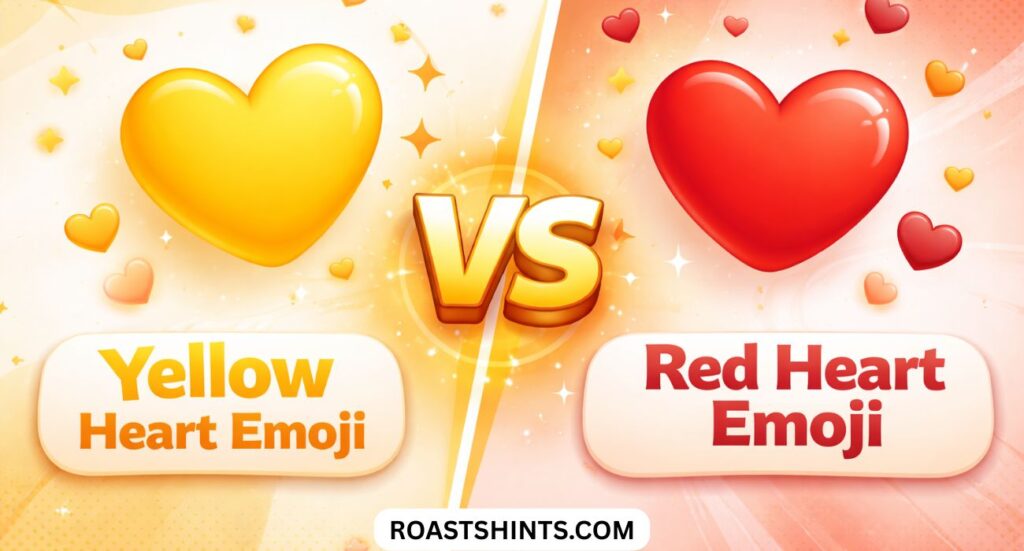
Many people compare the yellow heart to the red heart because both represent emotional connection. However, the biggest difference is emotional intensity. The yellow heart often feels friendly and comforting, while the red heart usually carries stronger romantic feelings and emotional closeness.
Understanding heart emoji colors helps people avoid confusion in texting. A yellow heart may suggest friendship or appreciation, while a red heart often signals romance. Choosing the right emoji helps create clearer communication and reduces the chances of misunderstandings.
When Should You Send a Yellow Heart Emoji?
The yellow heart is perfect when you want to sound caring without becoming overly emotional. People often send it during encouraging conversations, after kind gestures, or when showing appreciation. It works especially well in friendships because it creates warmth without romantic pressure.
Many Americans also use the yellow heart after someone shares good news or goes through a difficult time. Since it represents positivity and emotional support, the emoji becomes a small but meaningful way to strengthen relationships and maintain healthy communication.
Can the Yellow Heart Emoji Be Flirty?
Sometimes people wonder about the yellow heart flirting meaning, especially when someone they like sends it. While the yellow heart usually leans toward friendship, it can sometimes feel slightly flirty depending on the situation, emotional closeness, and texting habits between two people.
The best way to understand possible flirtation is to look at the entire conversation. If someone regularly compliments you, checks on you often, and sends warm messages, the yellow heart may suggest growing interest. Context matters much more than one emoji alone.
Common Mistakes People Make With Emoji Meanings
One common mistake people make is overthinking emojis too quickly. Many assume one emoji reveals deep emotional feelings, but that is not always true. The context of heart emojis matters because meaning changes based on the relationship and overall conversation.
Another mistake is ignoring texting habits. Some people naturally use emojis in every message, while others rarely use them. Understanding emoji interpretation becomes easier when people focus on patterns instead of trying to decode every single message emotionally.
FAQ’s
What does the 💛 mean in texting?
The 💛 yellow heart in texting usually means friendship, happiness, support, or appreciation. It is often used to show care without sounding overly romantic.
What is the difference between 💛 and ❤?
💛 usually represents friendship, positivity, and emotional warmth, while ❤ often symbolizes deep love, romance, or stronger emotional feelings.
What is yellow 💛?
The yellow 💛 heart emoji represents joy, kindness, trust, and friendship. People often use it to send warm and supportive feelings in conversations.
What is the meaning of ❤ 🧡 💛 💚 💙 💜?
❤ means love, 🧡 represents care and warmth, 💛 symbolizes friendship, 💚 stands for growth or support, 💙 means trust, and 💜 often represents compassion or admiration.
Final Thoughts
The Yellow Heart Emoji Meaning shows friendship, kindness, and positive feelings. People often use the yellow heart to share care and support in a simple way. It helps make text messages feel warm and friendly. This emoji works well in chats with friends, family, classmates, and even coworkers every day.
Understanding the Yellow Heart Emoji Meaning helps people reply in a better way. The yellow heart often shows trust, happiness, and emotional comfort. It usually keeps conversations light and positive. A kind reply and a friendly tone help build strong relationships and make digital communication easier for everyone.