100+ Hilarious Roasts That Hurt Badly
Good roasts that hurt are funny jokes with a sharp twist. They mix humor and truth in a clever way. They can make people laugh while still giving a small sting.
Some roasts are so clever that everyone laughs at once. A great line can turn a simple moment into a funny memory. The right words make the joke stronger and more enjoyable.
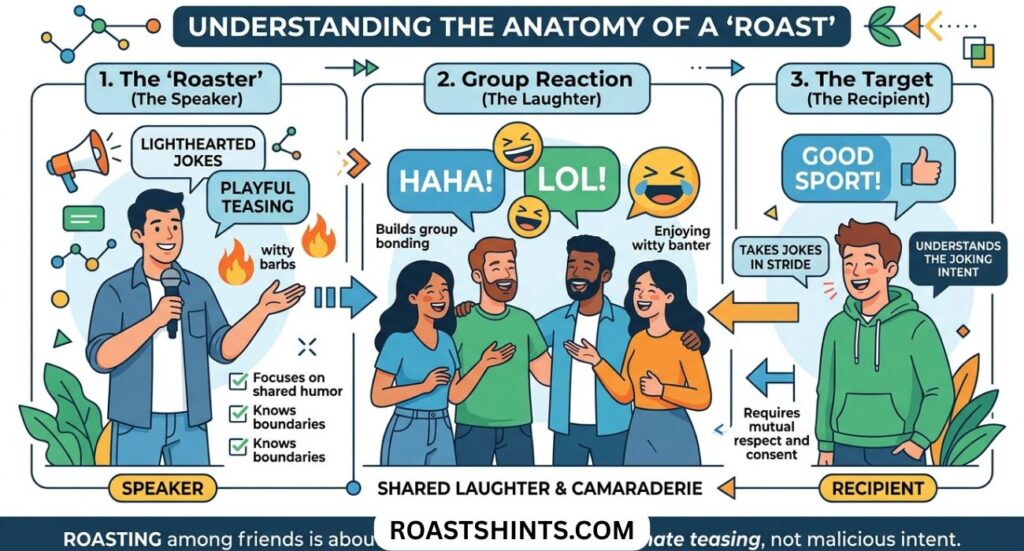
Good roasts that hurt work best with friends who enjoy playful teasing. They use simple jokes, clever words, and good timing. The goal is to make people laugh, not cause real hurt.
Read more: Polite Responses to “Have A Good Day”
What Makes Good Roasts That Hurt So Funny?
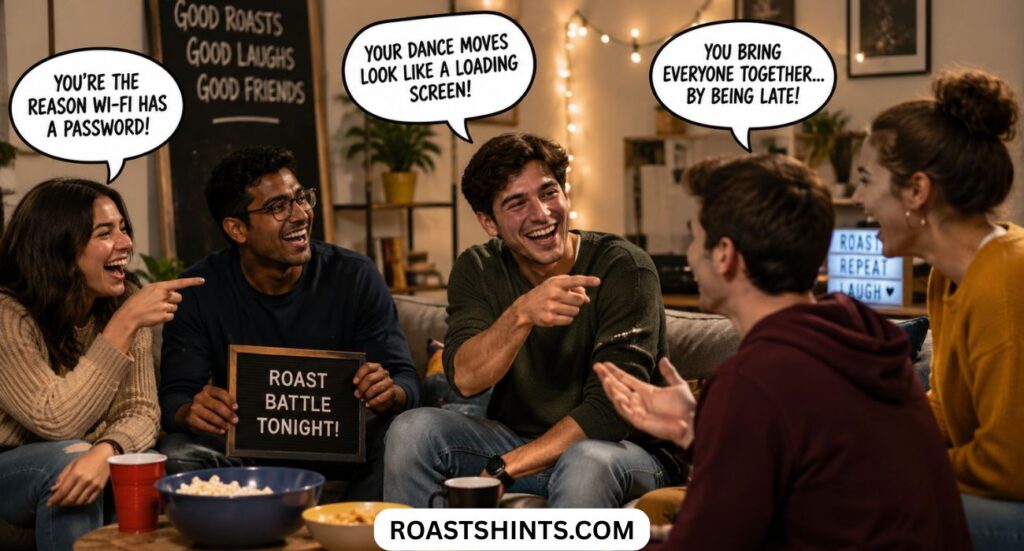
A good roast usually takes something familiar and gives it an unexpected twist. Instead of saying someone is lazy, for example, a clever joke can compare their productivity to something amusingly useless.
That difference matters. A direct insult is easy to forget, while a creative line can become a memorable good comeback.
The strongest jokes also depend on timing and delivery. A playful tone can make a sharp line feel friendly, while the same words delivered angrily can sound like a real attack.
Good roasting also requires knowing your audience. A joke between close friends may not work with a coworker, stranger, or someone who does not enjoy teasing.
The goal is simple: make the joke the star, not the person’s insecurities.
100 Good Roasts That Hurt Without Going Too Far
Here are 100 original roast lines divided by situation. Use the lighter categories when you want friendly humor and save the sharper ones for people who genuinely enjoy playful roasting.
Personality-Based Good Roasts That Hurt
Personality-based humor works best when you know the person well. These jokes focus on recognizable habits, confidence, drama, or everyday behavior rather than sensitive subjects.
- You bring everyone together, mostly because we all need to discuss what you just did.
- You have the confidence of someone who has never checked whether they were right.
- You are not dramatic; you just give every minor problem a full movie release.
- You could turn a simple story into a three-season series.
- You have two speeds: unnecessarily loud and mysteriously missing.
- Your personality has more plot twists than a streaming thriller.
- You do not seek attention; somehow attention just keeps filing complaints about you.
- You are proof that confidence and accuracy are completely different things.
- You make every entrance feel like an announcement nobody requested.
- You are wonderfully consistent at making simple things complicated.
These are examples of playful insults that work because they exaggerate familiar behavior. The source similarly uses personality traits as the basis for friendly teasing rather than cruel personal attacks.
Intelligence-Targeting Burns
Intelligence-targeting burns should focus on funny situations, confusion, forgetfulness, or questionable logic. Clever wordplay makes these lines more entertaining than simply calling someone stupid.
- Your brain is not offline; it is just taking an extended vacation.
- You bring a lot to every conversation, especially confusion.
- Your train of thought has clearly missed several connections.
- You could get lost in a one-page instruction manual.
- Your logic deserves its own mystery documentary.
- You are incredibly confident for someone who is regularly surprised by facts.
- Your common sense is apparently still buffering.
- You do not overthink things; you give every thought a retirement plan.
- Your brain has excellent ideas, unfortunately most of them are on backorder.
- You make mistakes with such confidence that they almost look intentional.
Clever roasts often land better when the punchline comes from an unexpected comparison. The source highlights wordplay and verbal agility as important parts of intelligent insults.
Appearance-Based Good Roasts That Hurt a Little
Appearance-based jokes require extra care. Keep them mild and focus on harmless choices such as outfits, hairstyles, or profile pictures. Never use a joke to target someone’s deep insecurities.
- Your outfit looks like it was assembled by a committee that never met.
- Your haircut has a stronger personality than most people I know.
- That outfit is definitely making a statement; we are just waiting for the translation.
- Your mirror must have an excellent sense of humor.
- You dress like your wardrobe is still waiting for a software update.
- Your profile picture and reality are clearly distant relatives.
- That haircut looks like your barber hit save before finishing.
- Your fashion sense is brave enough to ignore every warning sign.
- You look like you got dressed during a fire drill.
- Your outfit has confidence, even if the individual pieces do not.
Mild appearance-based roasts can stay funny when they avoid sensitive characteristics and focus on harmless choices. That approach follows the source’s distinction between playful humor and jokes that target deep insecurities.
Modern Life & Tech Roasts
Technology gives us endless material for funny roasts. Phones, Wi-Fi, social media, apps, notifications, and battery warnings are familiar to almost everyone.
- You have the energy of a phone stuck at one percent battery.
- You are like weak Wi-Fi: technically present, but nobody can depend on you.
- Your attention span has the loading speed of dial-up internet.
- You scroll so much your thumb deserves a promotion.
- You treat group chats like a full-time career.
- Your phone knows more about your daily routine than your closest friends.
- You have more selfies than actual accomplishments in your camera roll.
- Your productivity disappears faster than a free trial subscription.
- Your decision-making runs like outdated software: slowly and with unexpected errors.
- You are basically a human notification that nobody remembers subscribing to.
Modern communication, online humor, and social media have created countless opportunities for clever tech-based jokes. The source specifically uses phones, selfies, Bluetooth, battery warnings, and outdated technology as roast material.
Savage but Clever Roasts
These are sharper savage roasts, so they work best with people who already enjoy this style of humor. They should still avoid genuinely sensitive subjects.
- You are the reason instructions come with pictures.
- If bad decisions were an Olympic event, you would finally have a gold medal.
- You have a remarkable talent for turning confidence into evidence against yourself.
- You are not the main character; you are the unexpected technical difficulty.
- Your plans have the same survival rate as a snowball in July.
- You could lose an argument with a mirror and still blame the lighting.
- You have enough red flags to decorate an entire parade.
- If common sense paid rent, you would have been evicted years ago.
- You make chaos look like a personal lifestyle choice.
- Your greatest achievement today was almost having a good idea.
Savage humor needs restraint. The source recommends using stronger roasts sparingly, particularly with friends who understand tough-love humor.
Pop Culture & Media-Inspired Burns
Pop culture makes jokes easy to understand because movies, television, memes, and internet trends give people shared references.
- You have the energy of a plot twist everyone saw coming.
- You are basically the filler episode nobody remembers watching.
- Your life needs a recap before the next episode can begin.
- You have the confidence of a movie villain and the planning skills of an extra.
- You are giving sequel nobody asked for energy.
- If your decisions were a TV show, cancellation would be understandable.
- You are like a reality-show argument: loud, unnecessary, and somehow still entertaining.
- Your personality feels like a deleted scene that accidentally made the final cut.
- You have more unnecessary plot twists than a daytime drama.
- You are what happens when a comment section becomes a person.
Pop culture burns are especially useful for American humor because shared movies, shows, memes, and online references can make a roast instantly recognizable.
Read also: Heart-Touching Goodnight Messages
Light-Hearted Roasts for Friends
Good burns for friends should feel like teasing, not punishment. These are ideal for close friends who already understand your sense of humor.
- You are the human version of autocorrect making everything worse.
- You are my favorite person to blame when something goes wrong.
- You have a special talent for arriving late to your own good ideas.
- You make every group chat ten times more entertaining and five times more confusing.
- You are proof that friendship survives almost anything.
- I would explain it to you, but I left my crayons at home.
- You are the friend everyone needs and occasionally needs to mute.
- Your advice is free, which explains some things.
- You bring peace wherever you go, especially when you finally leave.
- You are impossible to replace, mostly because nobody else would volunteer.
Friendly roasting can strengthen social bonds when both people understand the joke. The source makes the same distinction: the aim should be to laugh with friends rather than at them.
Sarcastic Compliments That Sting
Sarcasm works because the surface sounds positive while the real meaning delivers the punchline. These are useful when you want witty insults with a lighter presentation.
- I admire how confidently you can be wrong.
- You have an impressive ability to make every situation about you.
- Your consistency is inspiring; you disappoint us exactly as expected.
- You really know how to make an entrance after everyone has stopped waiting.
- I love how you never let facts interfere with a great opinion.
- Your ability to underwhelm is honestly very dependable.
- You make being confidently incorrect look like a professional skill.
- You have a gift for making simple answers sound suspiciously complicated.
- Your timing is incredible, especially when you miss the point.
- You are living proof that enthusiasm can survive without preparation.
Sarcasm becomes more effective when the audience understands the playful intent. Tone and delivery matter just as much as the actual words.
Workplace Roasts
Workplace roasts should stay safe and professional. Keep the joke focused on meetings, emails, deadlines, office routines, and harmless work habits.
- You attend meetings with the confidence of someone who definitely read the agenda.
- Your inbox has more unanswered questions than a mystery novel.
- You treat deadlines like friendly suggestions.
- You have perfected the art of looking busy while your computer does all the work.
- Your calendar has more meetings than your schedule has actual productivity.
- You bring a unique energy to meetings: the energy of someone waiting for them to end.
- Your spreadsheet has more personality than most of our meetings.
- You use Reply All like you are personally trying to keep email providers employed.
- Your productivity and your coffee have one thing in common: both disappear by noon.
- You put the “pro” in procrastination and the “crastination” in every deadline.
Workplace humor requires more awareness because colleagues may not share the same relationship as close friends. The source recommends light banter while avoiding personal or sensitive subjects at work.
Short Good Roasts That Hurt
Sometimes the best roast is only a few words. These witty one-liners are easy to remember and work well in casual conversations or friendly group chats.
- Your confidence needs fact-checking.
- That sounded better in your head, didn’t it?
- You tried. The universe noticed.
- Bold of you to say that out loud.
- Your logic just left the chat.
- That idea needs adult supervision.
- You really committed to being wrong.
- Interesting choice. Terrible, but interesting.
- Your common sense is on airplane mode.
- I would roast you, but reality is already doing the work.
How to Roast Without Crossing the Line
Knowing how to roast someone nicely takes more than finding a clever sentence. You need to understand the person, the situation, and the likely reaction.
A roast should feel playful rather than personal. If you know someone dislikes jokes about a certain subject, leave that subject alone.
The easiest rule is to target harmless behavior instead of someone’s identity, trauma, appearance, health, or serious personal circumstances.
Timing matters too. A joke that works during a relaxed conversation may be completely wrong during an argument or stressful moment.
The source emphasizes audience awareness, emotional boundaries, and delivery. It also makes an important distinction: humor should build connection rather than become a weapon.
Why Do People Love Good Roasts?
People enjoy good roasts because they combine surprise with recognition. A joke can be funny because everyone knows the person who always arrives late, overthinks everything, or sends too many messages.
There is also a social side to roasting. Friendly jokes can show familiarity because you need to know someone well enough to recognize their harmless habits.
That is where humor and relationships overlap. When both people understand the boundaries, teasing can become part of the friendship.
Research discussed in the source connects friendly teasing with relationships, confidence, social bonding, and emotional intelligence.
Why Hilarious Roasts That Hurt Badly Make Us Laugh Harder
The phrase “hurt badly” does not have to mean genuinely hurtful. In comedy, it often describes the feeling of recognizing an uncomfortable truth in an exaggerated and funny way.
For example, saying someone is late is ordinary. Comparing their arrival time to a geological event is much more memorable.
That is why clever comebacks often work better than direct insults. The listener gets the surprise of the punchline while recognizing the truth underneath it.
Good roasting combines surprise, exaggeration, wordplay, and delivery. The source similarly describes hilarious roasts as a balance between truth, timing, tone, and humor.
The Secret Behind Crafting Clever and Funny Roasts
The easiest way to create clever jokes is to start with an ordinary observation.
Maybe your friend is always late. Maybe someone overexplains everything. Maybe a coworker schedules meetings for things that could have been an email.
Next, exaggerate the observation. Compare it with something unexpected.
Finally, make the ending short. A strong punchline usually does not need a long explanation.
This process uses wordplay, verbal agility, and communication skills without relying on basic name-calling. The source identifies truth, timing, and creativity as key ingredients in effective roasting.
A useful formula is:
Observation + exaggeration + unexpected comparison = memorable roast
For example, instead of saying someone procrastinates, you can turn the habit into a joke about treating deadlines like optional appointments.
That approach creates smarter humor and makes the line easier to remember.
Why Roasting Helps Build Stronger Friendships
Roasting can be a sign of trust when it happens between people who understand each other’s boundaries.
Close friends often develop their own style of teasing. One person may joke about another person’s obsession with coffee, endless scrolling, terrible punctuality, or dramatic storytelling.
The humor becomes part of the relationship instead of an attack.
Still, not every friendship works this way. Some people dislike teasing, and respecting that preference is more important than delivering the perfect comeback.
The source connects friendly roasting with trust, self-awareness, emotional intelligence, and stronger social bonds when the humor remains kind.
How Timing and Delivery Make a Roast Hit Hard
Even the best roast can fail if the timing is wrong.
A short pause before the punchline can make the joke stronger. A relaxed smile can also signal that you are joking.
Your tone matters. A playful voice says, “We are having fun.” An angry voice can make the exact same sentence sound hostile.
Read the room before you speak. If people are laughing and responding comfortably, the joke is probably landing. If someone becomes quiet or uncomfortable, move on.
The source stresses that timing, tone, facial expression, and delivery can determine whether a roast sounds clever or simply rude.
From Comedy Clubs to Offices: Roasting in Modern Life
Roasting appears everywhere in modern communication. Friends use it in text messages, group chats, birthday posts, and social media comments.
Comedians use observation and exaggeration to turn everyday experiences into jokes. Online creators often use short roast lines because they are easy to share.
Workplaces are different. A little humor can make a team feel relaxed, but professional boundaries still matter.
When using content marketing humor or social media humor, remember that written jokes lose facial expressions and vocal tone. A sentence that sounds playful in person can look harsher on a screen.
The source notes that roasting has become part of modern communication, including comedy, workplaces, social media, and casual conversations.
The Psychology of Why Roasts Hurt (But Feel Good)
A roast often works because it combines recognition with surprise.
You recognize the behavior, but the comparison is unexpected. That small gap between what you expect and what you hear creates the punchline.
This is part of the psychology of humor. People can laugh when a familiar situation is presented in a surprising but understandable way.
There is also a social element. Friendly teasing can signal closeness when both people understand that the joke is not meant as a serious attack.
The source describes roasting as a mixture of truth, surprise, recognition, humor, and social interaction.
Why Good Roasts That Hurt Work So Well
Good roasts that hurt work because they combine humor, truth, and surprise in one short line. The best funny roasts do not rely on cruel insults. Instead, they use clever wordplay, sarcasm, and relatable observations to create a memorable punchline. This makes hilarious roasts that hurt badly feel sharp while still keeping the conversation playful, especially among close friends.
A clever roast also depends on timing, delivery, and emotional intelligence. When the speaker understands the audience, even savage but clever roasts can become harmless entertainment. Friendly teasing works best when everyone understands the joke and respects personal boundaries. The goal is to create laughter, confidence, and social bonding rather than genuine embarrassment or hurt feelings.
See also: Happy New Month Messages for Friends
How to Use Funny Roasts Without Being Mean
Using funny roasts responsibly means choosing the right person, place, and moment. Good burns for friends should focus on harmless habits, funny mistakes, or everyday situations rather than appearance, trauma, identity, or personal insecurities. Clever comebacks are most effective when they sound playful and leave everyone laughing instead of making someone feel attacked or uncomfortable.
Timing and delivery can completely change how a roast sounds. A witty one-liner delivered with a smile can feel like friendly banter, while the same words spoken angrily may become an insult. Practice roasting etiquette, read social cues, and remember that humor works best when it strengthens relationships through laughter, trust, and mutual respect.
FAQ’s
What Is the Most Popular Roast?
“You’re the reason warning labels exist.” It is a short, savage roast that works because it is simple, unexpected, and easy to remember.
What Do I Say If Someone Roasts Me?
Respond with confidence: “Was that your best one?” A clever comeback keeps the banter going without making the exchange serious.
What Are the Best Roasts to Eat?
If you mean the best types of food roasts, prime rib, roast beef, and roasted chicken are popular choices. For jokes, clever and playful roasts are usually the most entertaining.
What Is the Strongest Roast?
A strong roast combines truth, clever wordplay, and perfect timing rather than simply being cruel. The best savage roasts sting while still making people laugh.
Final Thoughts
Good roasts that hurt can make a conversation funny and lively. The best roasts use simple words, clever ideas, and good timing. They should make people laugh, not feel bad. Use playful jokes with close friends and avoid sensitive topics. A smart roast shows confidence, humor, and respect while keeping the mood friendly.
Remember that good roasts that hurt need balance. A funny line can sting without becoming cruel. Choose your words with care and watch the other person’s reaction. Use humor to build friendship and create happy moments. The best roast stays clever, short, and respectful while giving everyone a good reason to laugh.