Orange Heart Emoji Meaning and Its Responses: A Simple Guide for the USA
The orange heart emoji 🧡 shows warmth, care, friendship, and gentle affection. It can express support and kindness in chats. Its meaning can change based on the situation.
One small heart can send a big message. The 🧡 may feel friendly, sweet, or caring. Understanding the context helps you read it correctly.
People use the orange heart emoji in texts, social media, and daily chats. Friends often use it to show support. Couples may also use it to show affection.
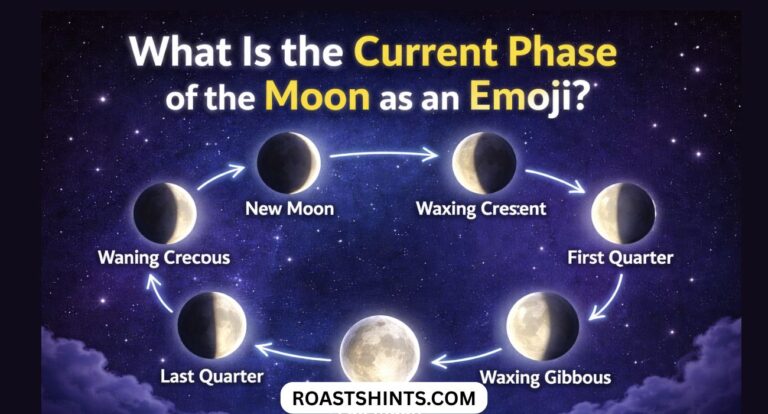
Read more: current phase of the moon emoji
The Meaning of the Orange Heart Emoji
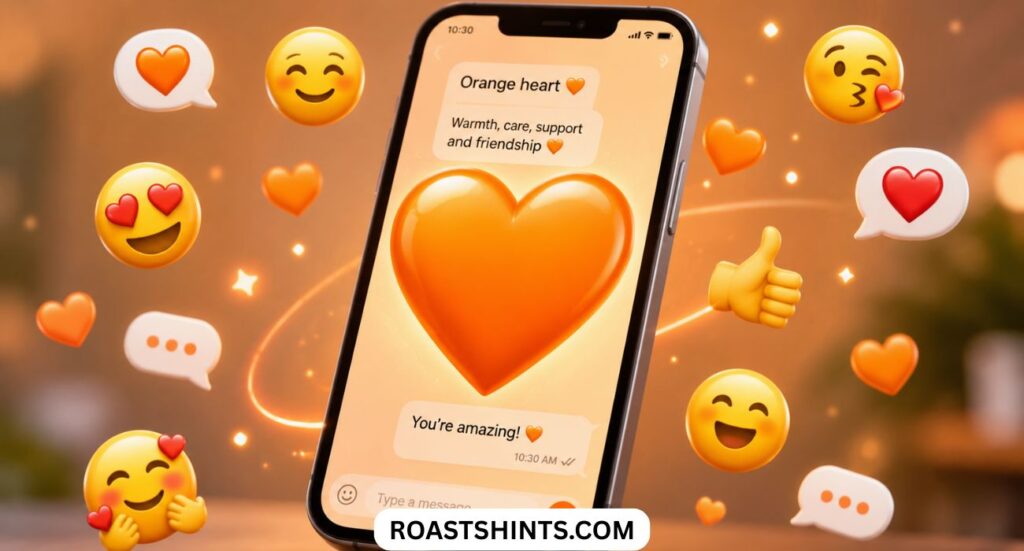
The meaning of the orange heart emoji usually centers on warmth, care, friendship, encouragement, and gentle affection. It can feel emotionally positive without being as intense as ❤️.
Unlike a word with one fixed definition, an emoji gets much of its meaning from context. Someone might send 🧡 after thanking a friend, supporting a family member, flirting with a date, or commenting on an autumn photo.
In other words, orange heart meaning is not always romantic. It can represent simple kindness just as easily as personal affection.
What Does Orange Heart Mean in Text Messages?
When someone asks, “what does orange heart mean?” the safest answer is that it expresses positive emotional connection.
For example, “Thanks for being there for me 🧡” often communicates gratitude and care. “Good luck today 🧡” may communicate support, while “Miss you 🧡” could carry a more personal or romantic tone.
Therefore, the orange heart emoji meaning in text depends strongly on the sentence surrounding it.
1. Friendship and Warmth
One of the most common uses of 🧡 is friendship. People often use it when they want to show affection toward someone without making the conversation sound strongly romantic.
The orange heart emoji friendship meaning can include loyalty, appreciation, closeness, and genuine care. It works naturally between best friends, siblings, classmates, and other people with a close bond.
For example:
“You always know how to make me laugh 🧡”
This could simply express friendly affection. There is no automatic romantic message hidden inside the heart.
The emoji can also soften a short message. A simple “Thank you” may sound formal, while “Thank you 🧡” feels warmer and more personal.
Orange Heart in Friendship
In orange heart in friendship situations, the emoji often works as a middle ground. It can feel more affectionate than a simple smile but less intense than ❤️.
That makes it useful for people who want to communicate friendly affection without creating romantic confusion.
It can also represent platonic heart emojis in conversations where both people already understand that the relationship is non-romantic.
2. Support and Encouragement
The orange heart is also a popular sign of emotional support.
Someone may send 🧡 before an exam, job interview, difficult meeting, sports event, or personal challenge. In these situations, the heart can mean, “I care about you,” “I believe in you,” or “I am here for you.”
For example:
“You’ve worked so hard for this. You’ve got it! 🧡”
Here, the strongest message is support and encouragement, not romance.
This use connects 🧡 with encouragement and positivity, especially when people want to make a supportive message feel more personal.
It can also communicate care and support when someone is going through a difficult time.
3. Ambiguous Romantic Signal
The orange heart can sometimes appear in romantic conversations. However, it is usually less direct than a red heart.
This is where orange heart emoji flirting becomes interesting. A person may use 🧡 while flirting because it shows warmth without making a strong declaration of love.
For example:
“Had such a great time with you tonight 🧡”
Depending on the relationship, this could be friendly or romantic.
That uncertainty is called romantic ambiguity. The emoji leaves room for interpretation rather than clearly saying, “I am in love with you.”
Orange Heart Emoji Relationship Meaning
The orange heart emoji relationship meaning can range from casual affection to genuine romantic interest.
Consider the entire conversation. If someone regularly flirts with you, compliments you, asks to spend time alone with you, and then sends 🧡, the heart may be part of a romantic pattern.
However, if the same person uses 🧡 with everyone, it probably has a broader meaning.
Orange Heart Emoji vs Red Heart
The easiest way to understand orange heart vs red heart is to think about emotional intensity rather than a strict dictionary definition.
| Emoji | Common impression | Typical use |
| 🧡 | Warm, caring, friendly | Friendship, support, affection |
| ❤️ | Strong love or deep affection | Romance, family, strong emotional bonds |
| 💛 | Cheerful and positive | Friendship, happiness, appreciation |
| 💚 | Nature, support, growth | Friendship, wellness, causes |
| 💙 | Trust and calm | Friendship, loyalty, support |
| 💜 | Affection, creativity, admiration | Romance, friendship, fandom |
These are general patterns, not fixed rules. People can give any heart their own personal meaning.
4. Aesthetic or Branding Choic
Sometimes 🧡 has little to do with interpersonal feelings.
People may use it because they like the color orange. It works especially well with autumn photos, sunsets, orange outfits, pumpkins, sports colors, and warm visual themes.
This explains many examples of orange in social media where the heart is simply part of the visual style.
Businesses can use it for the same reason. A company with orange branding may add 🧡 to posts because it matches its visual identity.
Orange Heart Emoji Color Meaning
The orange heart emoji color meaning is often connected with warmth, energy, friendliness, enthusiasm, and optimism.
Orange sits between the emotional associations commonly connected with red and the brighter, cheerful qualities often associated with yellow. That can make 🧡 feel warm without appearing as intense as ❤️.
Still, color symbolism should not be treated as a universal rule. Personal experience and culture can influence how someone interprets a color.
How Context Changes Its Meaning
Context is the most important part of emoji interpretation.
A heart from your best friend is different from the same heart from someone you recently started dating. Likewise, a 🧡 under an Instagram sunset photo is different from 🧡 at the end of a private message.
Look at these factors:
| Context | Likely interpretation |
| Best friend | Friendship and warmth |
| Family member | Care and affection |
| Person you’re dating | Affection or possible romance |
| Coworker | Appreciation or encouragement |
| Instagram comment | Support, enthusiasm, or aesthetics |
| TikTok comment | Positive reaction or casual affection |
| Brand post | Visual branding or community engagement |
This is why emoji meanings and usage should always be considered alongside the actual conversation.
Relationship Context Matters
The same emoji can carry different emotional weight depending on the relationship.
A friend saying, “Proud of you 🧡,” usually sounds supportive. A person you are dating saying, “I can’t wait to see you 🧡,” may sound more intimate.
The words, relationship, timing, and previous messages all contribute to the emotional tone in text messages.
How to Respond to the Orange Heart Emoji
Knowing how to respond to the orange heart emoji depends on what you want your own message to communicate.
If you feel the same warmth, matching 🧡 is simple. If you want to stay friendly, use a friendly response. If the situation feels romantic, you can choose a warmer heart or answer with words.
The goal is not to decode the emoji perfectly. The goal is to send a response that matches your own intentions.
Friendly/Platonic Situations
For a friend, you can respond naturally without making the exchange romantic.
Examples include:
“Aww, thank you! 🧡”
“Right back at you! 🧡”
“I appreciate you!”
“You’re the best! 🧡”
“Always got your back!”
These responses fit friendly communication and keep the emotional tone comfortable.
If you are unsure, a simple 🧡 back is also perfectly acceptable.
Romantic Ambiguity
When someone you may like sends 🧡, do not immediately assume they are confessing romantic feelings.
Instead, consider the complete conversation. Are they flirting? Do they frequently compliment you? Do they try to spend time with you? Is there already a romantic relationship?
If the answer is unclear, you can respond warmly without escalating the situation.
For example:
“I had a really good time too 🧡”
This acknowledges the warmth without making a major romantic statement.
If you clearly want to express romantic interest, ❤️ may communicate stronger feelings than 🧡.
Professional/Networking
Emojis are increasingly present in casual workplace messages, although their use varies by company, team, industry, and individual.
In professional use of emojis, context matters. A heart from a close colleague after congratulations may simply show appreciation.
However, work chat emoji etiquette is different from texting a close friend. When the relationship is formal, a simple smile, thumbs-up, or written thank-you may be safer.
This is particularly relevant to American work culture, where workplace communication can range from highly formal to very casual.
Social Media or Aesthetic Context
On social platforms, 🧡 often carries a lighter meaning.
Someone might comment:
“Love this! 🧡”
That does not necessarily mean romantic love. It may simply mean they like the photo, outfit, idea, video, or overall aesthetic.
This is common with Instagram emojis and TikTok emojis, where people often use hearts as quick reactions.
Expert-backed Insights on Emoji Use
Research into emoji communication generally shows why one emoji cannot provide a complete emotional interpretation.
Digital messages do not contain facial expressions, gestures, vocal tone, or body language. Emojis can help supply some of those missing emotional cues.
That is why emoji language in texting has become an important part of everyday digital communication.
An emoji can change how a sentence feels. “Good job” and “Good job 🧡” contain the same basic words, but the second version can feel warmer.
This is sometimes described as digital body language. Emojis do not literally replace physical gestures, but they can provide emotional signals that are otherwise missing from text.
The important point is that emoji meaning is contextual. Researchers and communication experts generally caution against treating one symbol as a universal emotional code.
Understanding the Orange Heart Emoji Meaning in Daily Chats
Everyday conversations provide some of the clearest examples of 🧡.
Consider:
“Thanks for checking on me 🧡”
This usually expresses appreciation and warmth.
“Good luck at your interview 🧡”
This focuses on support.
“Love you, bestie 🧡”
This can be strongly affectionate while remaining platonic.
“Can’t wait to see you later 🧡”
This may have romantic or friendly meaning depending on the relationship.
These examples show how emotional communication with emojis works. The emoji adds tone, but the words carry much of the actual meaning.
Orange Heart in Text Messages
An orange heart in text messages often works as an emotional softener.
It can make a short sentence seem less cold and help the recipient understand that the sender is being kind or affectionate.
This is particularly useful in casual conversations where people want to communicate feelings quickly.
Read also: Roasts that hurt and rhyme
Orange Heart Emoji Meaning from a Girl
The orange heart emoji meaning from a girl cannot be determined simply because the sender is a woman.
A girl may send 🧡 to her best friend, sibling, coworker, boyfriend, girlfriend, family member, or someone she is beginning to like.
If she sends it after a supportive statement, it probably expresses warmth or care. If she sends it during obvious flirting, it may carry romantic undertones.
Look for patterns instead of focusing on the emoji alone.
For example, repeated personal compliments, playful teasing, invitations to spend time together, and romantic conversation provide more information than one 🧡.
Orange Heart Emoji Meaning from a Guy
The orange heart emoji meaning from a guy works in much the same way.
A guy may use 🧡 with a friend because he appreciates them. He may use it with family because he cares about them. He may also use it while dating or flirting.
Gender does not provide a reliable definition for an emoji.
Instead, examine the relationship and online communication tone. A heart after “Proud of you” has a different emotional message from one after “I can’t stop thinking about you.”
Orange Heart Emoji in Social Media and Branding
The orange heart in social media can communicate several things at once.
It may show support for a creator, enthusiasm for a post, appreciation for a community, or simply match the colors in a picture.
The orange heart Instagram meaning often depends on the post. Under an autumn picture, it may simply reinforce the seasonal theme. Under a friend’s achievement post, it may show congratulations and support.
TikTok
The orange heart TikTok meaning can be equally flexible. It may appear in comments as a quick sign of approval, friendship, admiration, or emotional support.
Branding
Brands sometimes use orange because it creates a recognizable visual identity. When 🧡 appears in marketing, it may be part of branding emojis rather than a personal emotional message.
This makes social media branding an important distinction when interpreting heart emojis.
Emotional Psychology Behind the Orange Heart Emoji
Color can influence emotional associations, although people do not all experience colors in exactly the same way.
Orange is commonly associated with warmth, energy, enthusiasm, friendliness, and optimism. These associations help explain why the orange heart often feels cheerful and welcoming.
The orange heart symbol psychology is therefore less about one hidden message and more about the emotional qualities people commonly associate with orange.
Orange Heart Emoji Color and Emotional Tone
The color can create a softer emotional impression than a traditional red heart.
That is one reason 🧡 works well for casual affection, encouragement, and friendship.
It can communicate warmth and care while avoiding the intensity that some people associate with a red heart.
This makes it useful when someone wants emotional expression without making a strong declaration.
Heart Emoji Color Meanings
Different heart colors can develop different common associations in online conversations. However, these meanings are flexible rather than official rules.
Red Heart ❤️
The red heart meaning is most strongly associated with love, passion, romance, and deep affection.
It can also represent family love or strong friendship, so even ❤️ is not automatically romantic.
Yellow Heart 💛
The yellow heart meaning often suggests happiness, friendship, positivity, and cheerful affection.
It is common when people want to communicate warmth without a romantic tone.
Green Heart 💚
The green heart meaning can be associated with nature, growth, health, support, or particular communities. Its interpretation depends heavily on context.
Blue Heart 💙
The blue heart meaning is often connected with trust, loyalty, calmness, and friendship.
Purple Heart 💜
The purple heart meaning can communicate affection, admiration, creativity, support, or romantic feelings.
The broader lesson is that heart emoji meanings are patterns, not rigid definitions.
How to Respond to the Orange Heart Emoji Smartly
The best orange heart emoji response is the one that matches the relationship and the message you want to send.
Here is a simple approach.
If you want to stay friendly: Use 🧡 or a warm sentence.
If you appreciate the person: Say thank you and match their tone.
If you are romantically interested: A warmer response can make your feelings clearer.
If you are unsure: Keep your response friendly without escalating it.
If it is professional: Use a neutral, appropriate response.
This is also useful when learning how to reply to heart emojis generally. You do not have to copy the exact emoji. You can answer with words if the situation needs more clarity.
Friendly Responses
“Aww, thank you! 🧡”
“You’re so sweet!”
“Appreciate you!”
“Right back at you 🧡”
Romantic Responses
If the relationship is clearly romantic, you can be more direct:
“I feel the same way ❤️”
“Can’t wait to see you too 🧡”
“You make me smile every time.”
Neutral Responses
When you want to acknowledge the emoji without changing the relationship tone:
“Thank you!”
“That means a lot.”
“I appreciate it.”
These options are useful for maintaining emotional balance when you are not sure what the sender intended.
Orange Heart vs Yellow Heart
The difference between orange heart vs yellow heart is subtle.
Both can communicate friendship, positivity, and warmth. However, 🧡 often feels a little more emotionally warm or affectionate, while 💛 can feel especially cheerful and friendly.
Neither color automatically indicates a particular relationship.
For example:
“Thanks for always supporting me 🧡”
may feel warmly personal.
“You crushed it! 💛”
may feel bright and celebratory.
The surrounding words still matter more than the color alone.
Orange Heart Emoji in Dating
An orange heart in dating can be especially open to interpretation.
Early in dating, someone may use 🧡 because it communicates interest without feeling as serious as ❤️.
For example:
“Had so much fun tonight 🧡”
could indicate growing attraction.
But if someone uses 🧡 throughout conversations with many friends, the emoji may simply reflect their normal texting style.
Therefore, subtle romantic signals should be evaluated as a pattern rather than based on a single symbol.
Orange Heart Emoji and Flirting
When someone uses 🧡 during flirting, look at the entire interaction.
Flirting may include playful compliments, personal attention, teasing, invitations, affectionate language, and attempts to continue the conversation.
The emoji itself is only one small part of that pattern.
This distinction prevents a common mistake: assuming that every heart emoji represents romantic interest.
Sometimes it represents nothing more than casual affection.
Orange Heart Emoji and Non-Romantic Meaning
There are many situations where 🧡 clearly has a non-romantic purpose.
It can represent:
- Friendship
- Family affection
- Encouragement
- Appreciation
- Team spirit
- Community support
- Seasonal aesthetics
- Brand identity
These are examples of non-romantic emoji meanings and show why emoji interpretation requires context.
Orange Heart Emoji and Digital Body Language
Text messages remove many physical cues.
In person, you can hear someone’s voice and see their facial expression. Online, much of that information disappears.
Emojis can help restore some of the emotional tone.
A message such as “I understand” can sound neutral. Adding 🧡 may make it feel more compassionate.
This is why emojis have become part of digital expression and everyday emoji communication.
Still, emojis are not perfect substitutes for clear communication. When feelings truly matter, words remain more precise.
Professional and Workplace Use
Not every workplace has the same rules around emojis.
Some teams communicate casually through Slack, Microsoft Teams, text messages, or other platforms. Others maintain a more formal style.
In workplace communication, consider the relationship, company culture, and purpose of the message before using a heart.
For example, congratulating a colleague with “Great work! 🧡” may be completely normal in a friendly team.
However, in a formal business conversation, a written “Congratulations on the achievement” may be more appropriate.
The safest rule is simple: match the communication style already established by the team.
How Emoji Color Meanings Work
The idea of different heart colors is useful, but it should not be treated like a strict language dictionary.
People develop personal habits. Some users choose one heart color because they like it visually. Others use different colors for different relationships.
Therefore, emoji color meanings provide helpful clues, but they cannot replace context.
This is particularly important when interpreting emoji meanings in relationships.
If you want certainty about someone’s feelings, direct communication is more reliable than decoding a single emoji.
The Role of American Texting Culture
In the USA, texting is used across friendships, family relationships, dating, school, workplaces, and social communities.
That means the same emoji can travel between very different social settings.
A teenager may use 🧡 casually with a friend. A parent may use it to encourage their child. A coworker may use it in a congratulatory message. A dating partner may use it to show affection.
This variety is part of American texting culture and explains why there is no single answer for every orange heart.
A Simple Rule for Understanding 🧡
When you receive an orange heart, ask yourself three things:
Who sent it?
What did they say with it?
What kind of relationship do you have?
These three clues usually provide enough information to make a reasonable interpretation.
If the situation remains unclear, do not overanalyze the emoji. Continue the conversation naturally and pay attention to the person’s overall communication.
Orange Heart Emoji Meaning in Everyday Communication
The orange heart emoji adds warmth to digital conversations without always sounding deeply romantic. People use it to show friendship, appreciation, support, and gentle affection. Its meaning can shift with the relationship and message around it. Understanding this context helps readers interpret emoji language in texting, dating, social media, and everyday American communication without making quick assumptions about someone’s feelings.
When someone sends an orange heart emoji, consider who sent it, what they wrote, and your relationship. A friend may use it for encouragement, while a dating partner may use it to show affection. On Instagram or TikTok, it may simply support a post or match an aesthetic. Looking at the complete conversation gives you a much more accurate interpretation.
See also: HRMS Delhivery
How to Respond to the Orange Heart Emoji
Knowing how to respond to the orange heart emoji can prevent mixed signals. In friendly conversations, you can return the emoji or say, “Thank you, I appreciate you!” In romantic situations, match the emotional tone you genuinely feel yourself. For workplace messages, keep your response professional and consider your team’s communication style before using another heart emoji there too often.
The orange heart emoji meaning is flexible, so there is no single response that works everywhere. A warm reply can strengthen friendship, while a neutral response can maintain boundaries when the relationship is unclear. If you are unsure about romantic intent, focus on the person’s words and behavior instead of treating one emoji as definite proof of romantic attraction alone.
FAQ’s
What does the 🧡 mean in texting?
The 🧡 usually means warmth, friendship, care, support, or gentle affection. Its exact meaning depends on the relationship and conversation.
What does the 💜 mean in texting?
The 💜 commonly expresses affection, admiration, support, or care. It can be romantic or platonic depending on the context.
What does ❤ 🧡 💛 💚 💙 💜 mean?
These heart colors generally express different forms of love, friendship, care, positivity, support, and affection. Their meanings are flexible and depend on the sender and situation.
What does the 💛 mean in texting?
The 💛 usually represents friendship, happiness, positivity, appreciation, and cheerful affection. It often has a friendly rather than strongly romantic tone.
Final Thoughts
The orange heart emoji often shows warmth, care, friendship, and support. People use it in texts, social media, and daily chats. It can also show gentle affection or romantic interest. The meaning changes with the situation and relationship. Looking at the full message helps you understand the sender’s true tone and purpose more clearly.
The orange heart emoji also works well for friendly and supportive messages. You can reply with another heart, kind words, or a simple thank-you. In work chats, keep your reply polite and suitable. Remember that emoji meanings can change from person to person. Use the message, relationship, and setting to understand the meaning.